


7 Best Aquarium Fish for Beginners in 2025
Starting your first aquarium is an exciting journey into a vibrant underwater world. With hundreds of species available, choosing the right inhabitants can feel overwhelming. The key to a successful, stress-free start is selecting fish that are not only beautiful but also resilient and forgiving of common beginner mistakes. This guide is designed to navigate you through the best aquarium fish for beginners, ensuring your new hobby begins with happy, thriving pets. We'll explore hardy species that adapt well to various water conditions, have peaceful temperaments, and don't demand complex care routines.
By focusing on the right fish from the start, you set the stage for a rewarding experience. We will detail everything you need for success, including:
- Proper Tank Size: Ensuring your fish have enough space to thrive.
- Ideal Water Parameters: Simple breakdowns of temperature and pH needs.
- Diet and Feeding: What to feed and how often for optimal health.
- Tank Mate Compatibility: How to build a peaceful community tank.
Our goal is to provide specific, actionable insights that move beyond generic advice. We will even highlight why sourcing quality, quarantined livestock can make a significant difference in your success, ensuring your fish arrive healthy and ready to flourish in their new home. Let's find the perfect aquatic companions to bring your tank to life.
1. Betta Fish (Siamese Fighting Fish)
Often the first species that comes to mind for a beginner aquarium, the Betta fish, or Siamese Fighting Fish, is a stunning and captivating choice. Hailing from the shallow rice paddies of Southeast Asia, their vibrant colors and flowing fins make them a centerpiece in any small aquarium. Their popularity in major pet stores and even office environments stems from their reputation as a hardy and low-maintenance fish.
Bettas are labyrinth fish, which means they have a special organ that allows them to breathe atmospheric air directly. This unique adaptation helps them survive in low-oxygen water conditions, making them exceptionally forgiving for newcomers learning the ropes of aquarium maintenance. However, this doesn't mean they thrive in tiny, unfiltered bowls. Providing a proper environment is key to seeing their true, active personality shine.
Betta Care Essentials
To ensure your Betta lives a happy and healthy life, a few key requirements must be met. Contrary to popular belief, these fish need warmth and clean water to truly flourish.
- Heated Tank: Bettas are tropical fish and require a stable water temperature. A small, adjustable aquarium heater is essential to keep the water consistently between 76-82°F.
- Filtration: A gentle filter will keep the water clean from waste and toxins. Opt for a filter with an adjustable flow, as strong currents can stress the fish and damage its delicate fins.
- Safe Environment: Provide plenty of hiding spots with live or silk plants and smooth decorations. Avoid plastic plants and sharp objects that can easily tear their fins.
This infographic provides a quick reference for the most critical Betta care parameters.
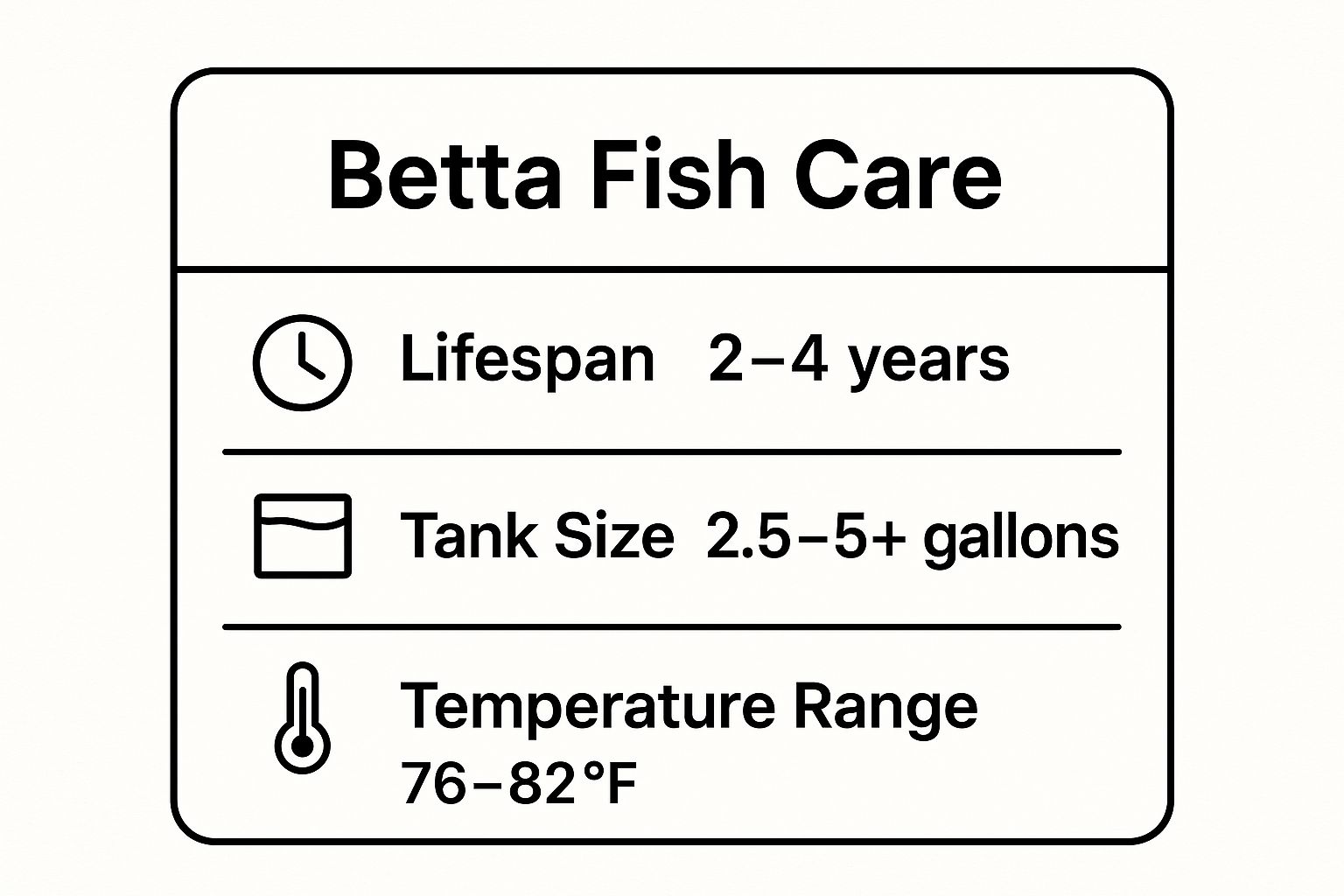
These core metrics highlight the importance of providing a stable, heated environment in an appropriately sized tank to support a healthy lifespan.
Tank Mates and Feeding
While known for their aggression (especially males toward other males), Bettas can sometimes be kept in community tanks with peaceful, short-finned fish. However, for a beginner, it's safest to house them alone. They are carnivores and thrive on a diet of high-quality Betta pellets, supplemented with occasional treats like frozen or freeze-dried bloodworms and brine shrimp.
For a visual guide on setting up the perfect Betta tank, check out this helpful video:
2. Goldfish
Arguably the most iconic pet fish in the world, the Goldfish is a classic choice that has been captivating aquarists for over a thousand years. Often seen as state fair prizes or classroom pets, these hardy coldwater fish are far more resilient and long-lived than their common reputation suggests. With proper care, these members of the carp family can thrive for decades, growing into impressive and personable pets.
Their enduring popularity as aquarium fish for beginners stems from their adaptability and generally peaceful nature. Unlike tropical fish, most common varieties do not require a heater, making the initial setup slightly simpler. However, the biggest misconception about Goldfish is their size requirement. The tiny bowl is a myth; these fish produce a significant amount of waste and need ample space and powerful filtration to live a healthy life.
Goldfish Care Essentials
To move beyond the myth and provide a truly suitable home, a few non-negotiable elements are required. A robust environment is the foundation for a Goldfish that lives for years, not weeks.
- Large Tank: Start with a minimum of a 20-gallon tank for a single fancy Goldfish. Plan to add at least 10 additional gallons for each extra Goldfish. Common, single-tailed varieties need even larger tanks or ponds as they grow.
- Powerful Filtration: Goldfish are messy. A high-quality filter rated for a larger tank size is crucial to handle their high bioload and keep ammonia and nitrite levels at zero.
- Water Changes: Regular, large-volume water changes (25-50% weekly) are essential to remove nitrates and keep the environment clean and stable.
These core requirements are vital for preventing common health issues and ensuring your Goldfish has the clean, oxygen-rich water it needs to flourish.
Tank Mates and Feeding
Goldfish are social and do well with other Goldfish. Avoid housing them with most tropical species due to different temperature needs and the risk of fin nipping. When it comes to diet, variety is key to their health. They are omnivores and will happily consume high-quality pellets or gel food as a staple. Avoid a diet of only flakes, which can cause digestive issues. Supplement their meals with blanched vegetables like peas (deshelled), spinach, and zucchini to provide essential nutrients and fiber.
3. Guppies
Often called the "million fish" due to their prolific breeding habits, Guppies are a vibrant and dynamic addition to any beginner aquarium. Originally from Northeast South America, these small livebearers are celebrated for their hardiness and dazzling array of colors and fin shapes, especially in males. Their peaceful demeanor and constant activity make them one of the most popular and recommended aquarium fish for beginners.
Guppies are incredibly forgiving of common beginner mistakes and adapt well to a range of water conditions. Their active nature brings life to a community tank, and watching them explore is endlessly entertaining. Because they give birth to live, free-swimming young (known as fry) instead of laying eggs, they also offer a fascinating and firsthand look at fish reproduction, making them a favorite for hobbyists of all ages.
Guppy Care Essentials
To keep your Guppies healthy and colorful, a stable and clean environment is paramount. Their hardiness makes them easy to care for, but they will thrive when their basic needs are consistently met.
- Proper Male-to-Female Ratio: To prevent males from stressing and harassing a single female, always keep them in groups with a ratio of at least two to three females for every one male.
- Hiding Places for Fry: Guppies are prolific breeders. If you wish for any fry to survive, provide dense clumps of live or artificial plants, like Java moss or hornwort, to offer them cover from hungry adults.
- Varied Diet: While they readily accept high-quality flake food, their health and coloration will improve with a varied diet. Supplement their main food with occasional treats like frozen brine shrimp, daphnia, and bloodworms.
These simple steps ensure your Guppies remain active and vibrant, turning your tank into a lively display of color.
Tank Mates and Feeding
Guppies are ideal community fish and get along well with other peaceful species of a similar size. Good tank mates include Corydoras catfish, platies, mollies, and neon tetras. Avoid housing them with larger, aggressive fish or notorious fin-nippers, as the long, flowing tails of male Guppies can be an irresistible target.
Feeding is straightforward. Provide small amounts of food once or twice a day, only giving them what they can consume in under two minutes. This prevents overfeeding and helps maintain good water quality, which is crucial for their long-term health and success in your aquarium.
4. Neon Tetras
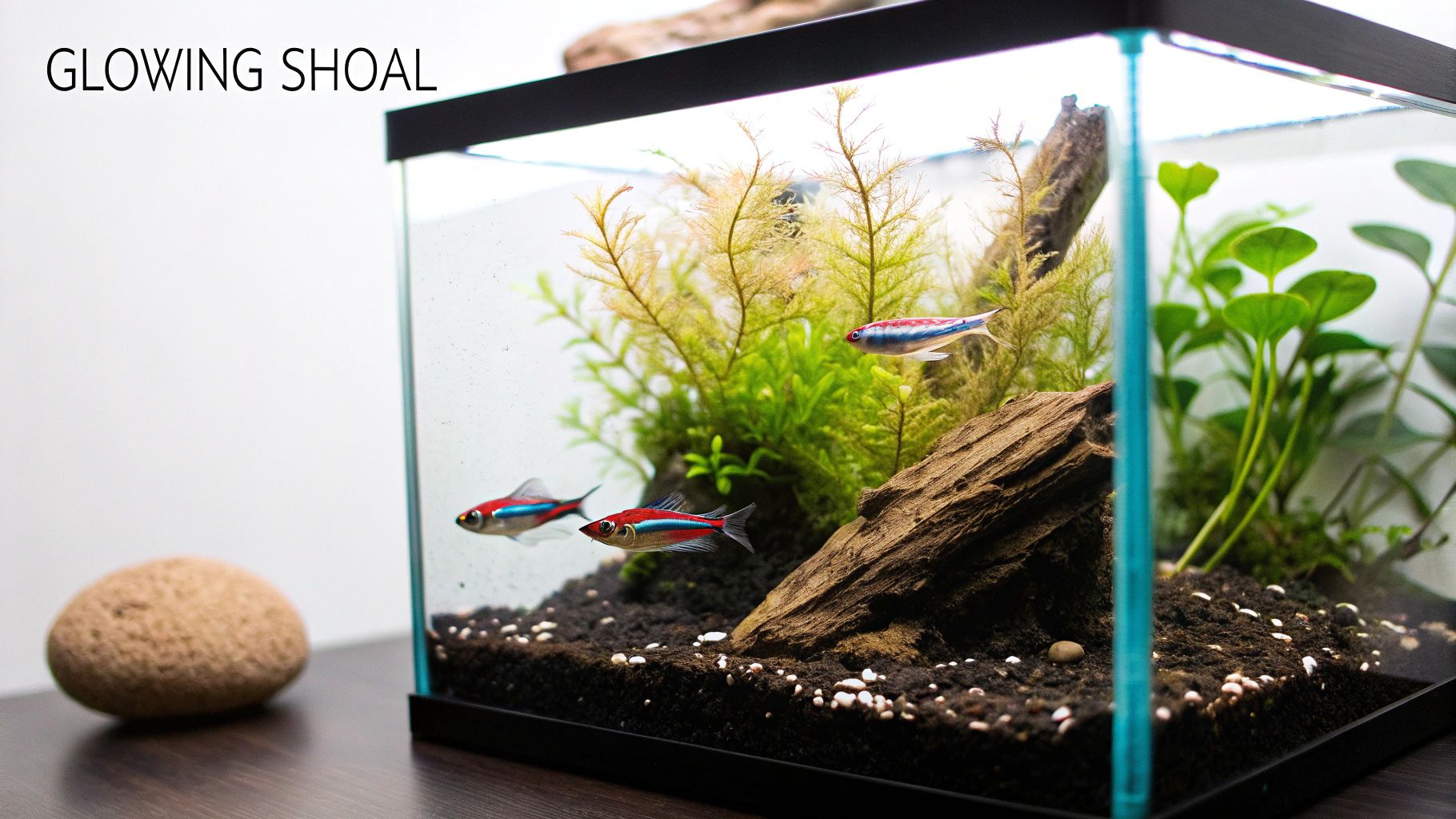
A true icon of the aquarium hobby, the Neon Tetra is a tiny, dazzling fish that brings vibrant color and energy to any tank. Famous for their iridescent blue stripe running horizontally along their body and a striking red stripe below it, they create a mesmerizing shimmering effect, especially under aquarium lighting. Native to the blackwater streams of South America, these peaceful and hardy fish are a staple choice for anyone looking to start a beautiful community aquarium.
Their small size, peaceful nature, and relatively simple care requirements make them one of the best aquarium fish for beginners. They are inexpensive and widely available, allowing newcomers to easily create a stunning visual display without a massive investment. When kept in a proper school, their synchronized movements add a dynamic and captivating element to a planted or biotope-style setup.
Neon Tetra Care Essentials
To see the brilliant colors and active schooling behavior of Neon Tetras, it is crucial to provide a stable and suitable environment that mimics their natural habitat.
- Proper Schooling: Neon Tetras are social fish and feel insecure when kept alone. A group of at least 6, but preferably 10 or more, is essential for their well-being and will encourage their natural schooling behavior.
- Water Parameters: They thrive in soft, slightly acidic water, but most tank-bred specimens are adaptable. The key is stability, so avoid sudden changes in pH, hardness, or temperature. Aim for a temperature between 72-78°F.
- Tank Setup: A well-planted tank with a dark substrate will make their colors pop and provide security. Dim lighting and plenty of hiding spots among driftwood and plants will help them feel safe and reduce stress. A 10-gallon tank is a minimum starting point for a small school.
Tank Mates and Feeding
Neon Tetras are ideal community fish due to their peaceful temperament. They get along well with other small, non-aggressive species like Corydoras catfish, Guppies, other small Tetras, and Rasboras. Avoid housing them with larger, predatory fish that might see them as a snack.
As omnivores, they are not picky eaters. A balanced diet of high-quality micro pellets or crushed flakes is perfect for their daily needs. To boost their health and color, supplement their diet with occasional treats like daphnia, baby brine shrimp, or freeze-dried bloodworms, ensuring the food is small enough for their tiny mouths.
5. Zebra Danios
For the beginner seeking an aquarium filled with constant motion and energy, the Zebra Danio is an unparalleled choice. These small, torpedo-shaped fish are instantly recognizable by their namesake horizontal stripes that run the length of their bodies. Originating from the streams and rivers of the Himalayan region, they are incredibly hardy and adaptable, making them one of the most forgiving species for newcomers to the hobby. Their resilience is so well-known they are often recommended for cycling a new aquarium.
Zebra Danios are active swimmers that occupy the top levels of the tank, adding a dynamic and exciting element to any community setup. Their ability to thrive in a wide range of water temperatures and conditions takes much of the stress out of initial aquarium setup. This resilience, combined with their peaceful nature, solidifies their spot as a top-tier aquarium fish for beginners.
Zebra Danio Care Essentials
To keep your school of Zebra Danios active and healthy, focusing on their social and environmental needs is key. They are not demanding, but a few simple considerations will ensure they flourish.
- Schooling Behavior: Zebra Danios are social fish and must be kept in groups. A school of at least 6 individuals is recommended to promote natural behavior and reduce stress. A larger group creates a truly impressive display of synchronized swimming.
- Tank Lid: These fish are notorious jumpers. A tight-fitting lid is absolutely essential to prevent them from leaping out of the aquarium, especially when startled or excited during feeding time.
- Water Flow: Coming from river-like environments, they appreciate good water circulation. A filter that creates a gentle to moderate current will mimic their natural habitat and keep them active.
Tank Mates and Feeding
Zebra Danios are the quintessential peaceful community fish. They get along well with other active, similar-sized species like tetras, corydoras, and platies. However, their high-energy nature can be stressful for slow-moving or long-finned fish, so avoid pairing them with species like Bettas or Angelfish.
They are omnivores and very easy to feed. A high-quality flake or micro-pellet food should form the basis of their diet. You can supplement this with occasional treats like daphnia or brine shrimp to provide variety and enrichment. Their enthusiastic feeding response is a joy to watch, but be careful not to overfeed.
6. Corydoras Catfish
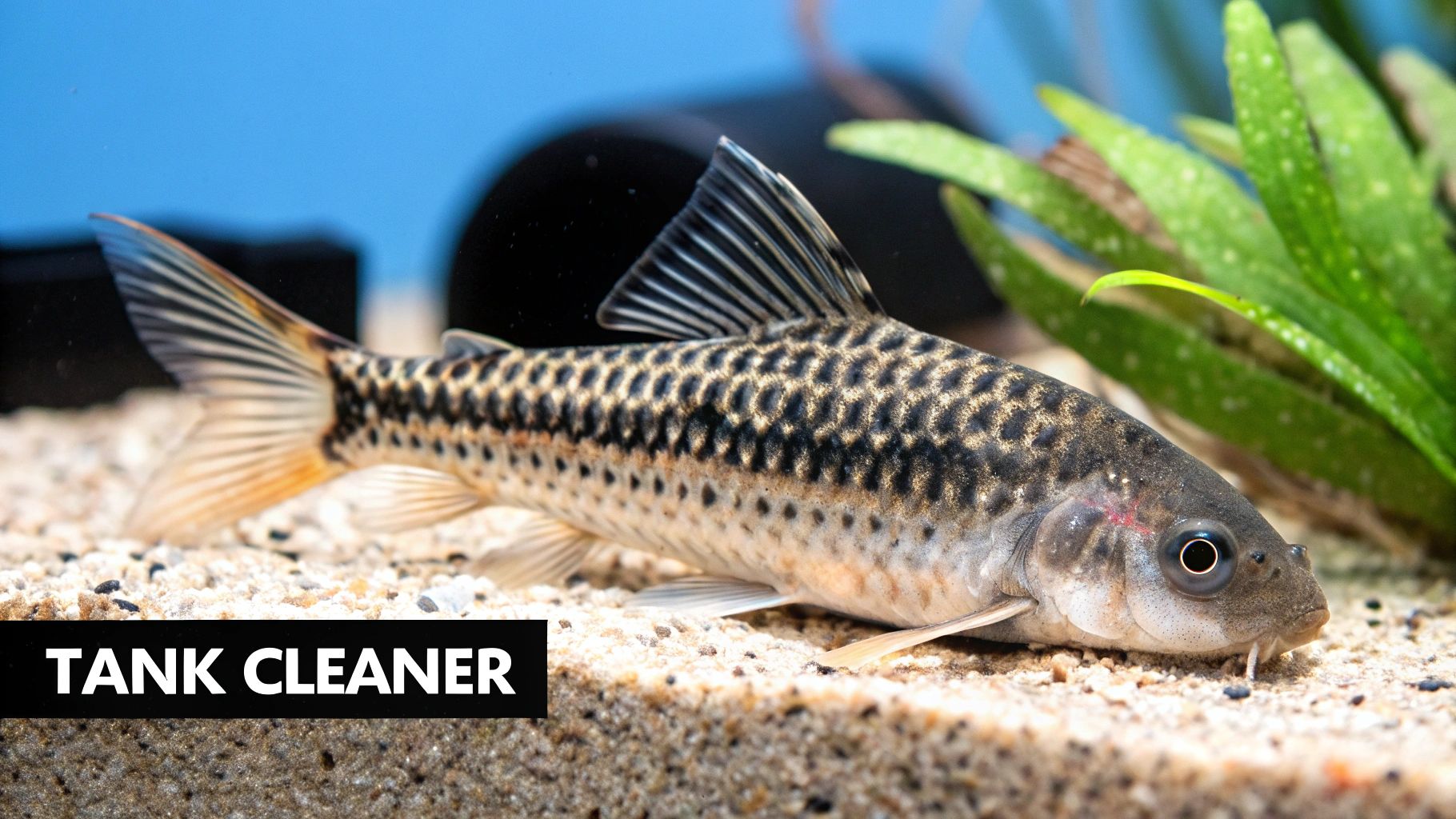
For those looking to add activity and charm to the lower levels of their tank, the Corydoras Catfish is an outstanding choice. These peaceful, armored bottom-dwellers are beloved not only for their playful personalities but also for their role as an efficient cleanup crew. Hailing from South America, they are exceptionally social and thrive in groups, constantly sifting through the substrate for leftover food.
Corydoras, often called "cories," are incredibly hardy and tolerant of a wide range of water conditions, making them one of the best aquarium fish for beginners. Their peaceful nature allows them to coexist with nearly any non-aggressive community fish. Watching a small school of cories dart around the bottom of the tank adds a dynamic and engaging element that many new hobbyists appreciate.
Corydoras Care Essentials
To keep your Corydoras happy and active, providing the right environment is crucial. Their bottom-dwelling nature means special attention should be paid to the substrate and their social needs.
- Group Living: Corydoras are schooling fish and feel most secure in groups. A minimum of 3-6 individuals is recommended to see their natural, social behaviors and prevent stress.
- Safe Substrate: These fish use their sensitive barbels (whiskers) to search for food. A soft substrate like sand or fine, rounded gravel is essential to prevent injury. Avoid sharp or coarse gravel.
- Hiding Spots: Like many fish, cories appreciate having places to retreat. Provide cover with smooth rocks, driftwood, or caves to make them feel secure.
These core requirements will ensure your cories remain healthy and can perform their cleanup duties effectively without stress or injury.
Tank Mates and Feeding
Corydoras are ideal community fish and can be kept with a wide variety of peaceful tank mates like tetras, guppies, and even angelfish. They are omnivores and, while they will eat leftover flakes that sink to the bottom, their diet should be supplemented. Ensure they get enough to eat by providing high-quality sinking pellets, wafers, or frozen foods like daphnia and bloodworms. This targeted feeding ensures they don't have to rely solely on scraps, which may not provide adequate nutrition.
7. Platies
Platies are one of the most cheerful and adaptable aquarium fish for beginners, bringing a splash of constant color and activity to any tank. Closely related to guppies and swordtails, these livebearing fish are celebrated for their peaceful nature, hardiness, and the stunning array of colors and patterns they come in, including red, blue, yellow, and marbled varieties. Their forgiving nature makes them an excellent choice for those just starting their journey in fishkeeping.
Originating from Central America, Platies are accustomed to a wide range of water conditions, which contributes to their reputation as a sturdy species. They are active swimmers that explore all levels of the aquarium, making them a consistently engaging fish to watch. Their ease of care and breeding also makes them a popular choice for beginner breeding projects or simple, vibrant community tanks.
Platy Care Essentials
To keep your Platies vibrant and healthy, creating a stable and clean environment is paramount. These fish are not demanding, but they thrive when their basic needs are met.
- Stable Temperature: As tropical fish, Platies do best in water kept between 72-78°F. A reliable aquarium heater will prevent temperature fluctuations that can cause stress and lead to illness.
- Water Quality: Clean water is crucial. A good filtration system paired with weekly 25% water changes will keep ammonia and nitrate levels in check, ensuring a healthy habitat.
- Community Setup: Platies are incredibly peaceful and do well in groups. Aim for a ratio of at least two females for every male to reduce stress on the females from constant breeding attention. They are an ideal community fish.
Tank Mates and Feeding
Platies are famously non-aggressive, making them perfect tank mates for other peaceful species like guppies, mollies, tetras, and corydoras catfish. Avoid housing them with large, aggressive fish that might see them as food.
As omnivores, Platies require a varied diet. A high-quality flake or pellet food can serve as their staple, but it should be supplemented with both protein and vegetable matter. Offer them occasional treats like frozen brine shrimp or daphnia, along with blanched vegetables like zucchini or spirulina-based foods to ensure they receive a balanced diet and maintain their bright colors.
Beginner Aquarium Fish Comparison Chart
| Fish Type | Implementation Complexity 🔄 | Resource Requirements ⚡ | Expected Outcomes 📊 | Ideal Use Cases 💡 | Key Advantages ⭐ |
|---|---|---|---|---|---|
| Betta Fish (Siamese Fighting Fish) | Low - minimal equipment, small tank (2.5-5+ gal) | Low - inexpensive, low maintenance | Moderate - lifespan 2-4 years, vibrant visuals | Beginners with limited space, solo tanks | Hardy, air-breathing, visually striking |
| Goldfish | Moderate - large tank (20+ gal), strong filtration | High - large tank, filtration, water changes | High - long lifespan 10-30+ years, interactive | Beginners with space, long-term companions | Extremely hardy, coldwater tolerant |
| Guppies | Low - easy breeding, small tank (10+ gal) | Low - simple setup, inexpensive | Moderate - lifespan 1-3 years, rapid breeding | Beginners wanting community tanks and breeding | Peaceful, colorful, easy to breed |
| Neon Tetras | Moderate - schooling fish, needs groups (6+), planted tank | Moderate - stable water, plant care | Moderate - stunning in groups, peaceful community | Beginners creating planted community tanks | Bright colors, peaceful, schooling fish |
| Zebra Danios | Low - hardy, active swimmers, schooling (5+), long tank preferred | Low - simple setup, tolerant to temp changes | Moderate - hardy, active, suitable for tank cycling | Beginners needing hardy active fish | Very hardy, entertaining, cold-tolerant |
| Corydoras Catfish | Moderate - need sandy substrate, groups (3+), established tanks | Moderate - substrate care, diet supplementation | Moderate - tank cleaners, social, peaceful | Beginners wanting bottom cleaning fish | Hardy, peaceful, substrate cleaners |
| Platies | Low - livebearers, small tank (10+ gal), easy breeding | Low - adaptable, little specialized equipment | Moderate - lifespan 2-3 years, easy reproduction | Beginners wanting community and breeding | Hardy, colorful, peaceful |
Your Next Steps to a Thriving Aquarium
Embarking on your journey into the world of fishkeeping is an incredibly rewarding experience, and choosing the right first inhabitants is the most critical step. We've explored seven of the best aquarium fish for beginners, from the solitary splendor of the Betta to the energetic schooling of Zebra Danios. Each species we've detailed, including Guppies, Neon Tetras, Platies, Corydoras Catfish, and even the classic Goldfish, offers a unique window into the aquatic world, combining hardiness with captivating personalities.
The core lesson weaving through each recommendation is the principle of "prepare, then purchase." A successful aquarium is not a matter of luck; it's the direct result of thoughtful planning and creating an environment tailored to your chosen fish's specific needs. Rushing to the store and buying a fish on impulse is the most common mistake new hobbyists make, often leading to stress, illness, and disappointment.
From Knowledge to Action: Your Aquarium Checklist
Before you bring home your new aquatic pets, translate this knowledge into a concrete action plan. This methodical approach will prevent common pitfalls and set the stage for a healthy, thriving ecosystem that brings you joy for years to come.
- Finalize Your Fish Choice: Review the species on our list. Does the solitary nature of a Betta appeal to you, or do you envision a lively community tank with Guppies and Corydoras? Your personal preference is the starting point.
- Commit to the Right Tank: The single most important factor is tank size. Never put a fish in a tank that is too small. A 5-gallon tank is the minimum for a single Betta, while a 20-gallon tank opens up possibilities for a small community of Neon Tetras or Platies. A larger volume of water is more stable and forgiving of minor mistakes.
- Master the Nitrogen Cycle: Do not skip this step. Research and understand the aquarium nitrogen cycle before adding fish. This biological process, where beneficial bacteria convert toxic fish waste into less harmful substances, is the invisible foundation of a healthy tank. Cycling your tank properly can take several weeks, but your patience will be rewarded with stable water quality and healthy fish.
- Gather Your Equipment: Based on your chosen fish, acquire the necessary hardware. This includes a filter appropriate for your tank size, a heater to maintain a stable temperature (essential for most tropical fish like Bettas and Guppies), a water testing kit (for ammonia, nitrite, and nitrate), and a quality water conditioner to neutralize chlorine from tap water.
The True Reward of Responsible Fishkeeping
Mastering these fundamentals does more than just keep your fish alive; it transforms your role from a simple owner to a true aquarist. You become the caretaker of a miniature, self-contained ecosystem. The reward is watching your fish exhibit their natural behaviors in a stress-free environment: the vibrant flash of a Guppy's tail, the diligent foraging of a Corydora, or the graceful glide of a Betta through a planted tank. This is the beauty that responsible preparation unlocks.
Armed with this guide, you are no longer just a beginner; you are an informed hobbyist ready to make excellent choices. You have the foundational knowledge to not only select the perfect aquarium fish for beginners but also to provide them with a home where they can flourish.
Ready to start your aquarium with healthy, vibrant fish? For a guaranteed great start, consider sourcing your first inhabitants from BlueRipple Aquatics. They specialize in providing robust, pre-quarantined fish, ensuring you receive active, disease-free specimens perfect for a beginner's tank. BlueRipple Aquatics helps you begin your hobby with confidence and quality.
Article created using Outrank

